
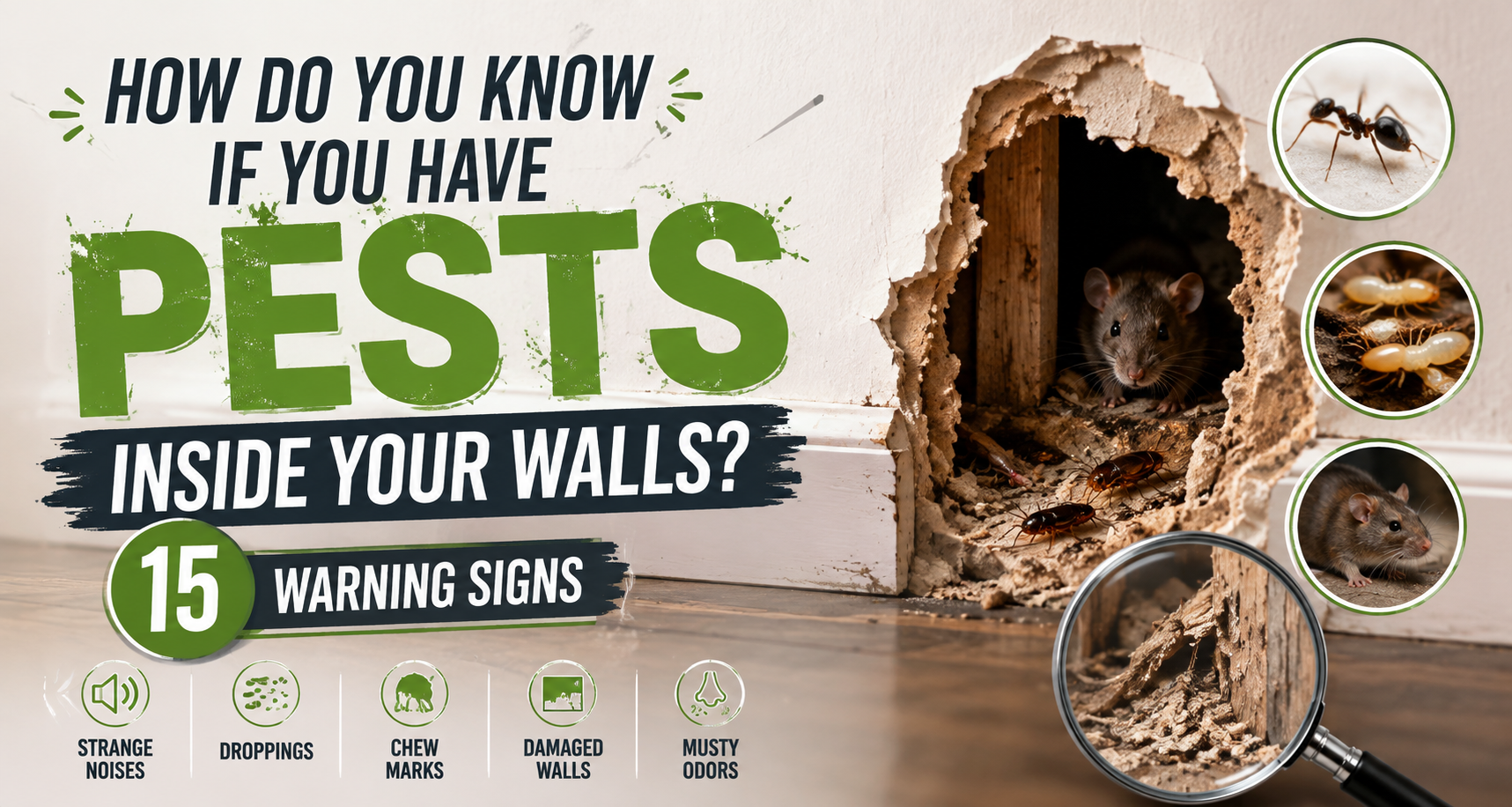
How Do You Know If You Have Pests Inside Your Walls? 15 Warning Signs
Pests do not always announce an infestation by appearing in the middle of your kitchen or crawling across the floor. Rodents, ants, termites, and other pests can spend days or weeks in concealed areas such as wall cavities, ceilings, insulation, attics, and crawl spaces before homeowners see them. Pest Control Vancouver services not only understand infestations but also identify scratch marks and weird sounds coming from your walls.
So, how do you know if you have pests inside your walls? You may hear continuous scratching or scurrying sounds, unexplained droppings, and gnaw marks. These represent pest activity around wall openings. However, you don’t have physical evidence unless you order Pest Removal, Surrey services to identify hidden pests inside your home or office walls.
However, one sign alone does not always confirm an infestation. For example, a musty smell or damaged drywall can have causes unrelated to pests. The most useful approach is to look for multiple signs occurring in the same area and have the source professionally identified when the evidence persists.
Here are 15 warning signs that may indicate pest activity inside your walls.
15 Signs of Pests Inside Your Walls
1. Scratching, Scurrying, or Rustling Sounds
Most times, owners ignore weird sounds coming from inside a wall. These are not just audible annoyances. These are warning signs. Especially when they occur in the same location. For example, you may hear scratching, scurrying, rustling, gnawing, movement inside wall cavities, etc.
2. Droppings Near Baseboards, Walls, or Cabinets
Finding droppings is one of the more useful physical signs of rodent activity. For example, you may notice mouse droppings near entranceways or hallways. They can be spotted near your cabinets and baseboards.
If you clean an area and new droppings appear later, that provides stronger evidence of ongoing activity.
3. Gnaw Marks on Wood, Drywall, Wiring, or Other Materials
Rodents continually gnaw, and fresh gnaw marks can provide evidence that they are active around a property. You should look for:
- Small chew marks around openings
- Damaged wood and plastic
- Chewed wires and new openings around utility penetrations
4. Unexplained or Persistent Odors
If you see a strange smell coming from the wall, this can be a strong warning sign of pest infestation. However, you should always notice:
- A strong urine-like smell
- A persistent animal odor
- An unpleasant decomposition smell
- An unusual smell concentrated around one wall or opening
5. Grease Marks or Dark Smudges Along Walls
Rodents can repeatedly travel along the same routes. Contact between their bodies and surfaces may leave dark marks or smudges, particularly along frequently used pathways.
Check areas such as baseboards, wall corners, behind appliances, around openings, and narrow passageways.
6. Small Holes or Gaps Appearing Around Walls
When you see openings around drywall, pipes, or kitchen cabinets, it is another sign that pests are making a way into your house. Now, this can happen through various cracks and gaps around walls and ceilings. So, the real problem is not finding a tiny crack. You should understand the cost of not calling pest control services in Canada to keep them away from your property.
7. Damaged or Disturbed Insulation
Insulation inside wall cavities can provide shelter or nesting material for some pests, particularly rodents.
Signs may include:
- Torn or displaced insulation
- Nesting material
- Debris around wall openings
- Insulation pulled toward an accessible cavity
Pest infestation is often found where there is damaged insulation. This is where Pest Control Richmond services can help you identify droppings, scratching sounds, or nesting materials.
8. Nesting Materials Near Wall Openings
Rodents may use materials available around a property to build nests. Possible nesting materials can include shredded paper, fabric, cardboard, fibrous material, and insulation.
9. Ants Emerging from Wall Cracks or Trim
If you see bugs or ants coming from the same crack or a wall void, or other structural opening, this can show a nest nearby.
You should look to see whether any wood damage has been done near nesting areas. Because different ant species require different management approaches, identifying the species is more useful than simply treating every ant sighting in the same way.
10. Sawdust-Like Material or Frass
Insects don’t love wood. But they love destroying it. If you see small piles of sawdust-like material near wood, this becomes a red flag instantly. These could be carpenter ants or something else hidden inside your walls.
11. Mud Tubes, Discarded Wings, or Other Termite Evidence
Termites can remain concealed while causing damage, making physical evidence articularly important. Possible signs include:
- Mud tubes or shelter tubes
- Discarded wings near windows or other openings
- Damaged or hollow-sounding wood
- Visible termite activity
- Changes to wood around affected areas
Do not assume that every damaged piece of wood has been affected by termites. Moisture and decay can produce similar damage.
12. New Stains, Marks, or Damage Around Wall Openings
Pay attention to changes around:
- Pipe penetrations and vents
- Electrical openings and baseboards
- Cabinets and wall junctions
- Attic access points
13. An Increasing Number of Pests Inside the Home
Seeing one pest does not automatically mean you have a hidden infestation. However, a sudden or continuing increase in sightings deserves attention. For example, you may notice:
- Repeated mouse sightings and increasing cockroach activity
- Ants appearing from the same location
- More insects appearing around wall openings
- Pest activity spreading to additional rooms
This is one reason why Pest Control Burnaby should address why pests can remain on the property when they are not even visible
14. Pest Activity Appears to Be Coming from One Specific Wall
If sounds, odors, droppings, or pest sightings repeatedly originate from the same wall or section of the home, the pattern itself can be useful. A better way to understand the noise is to listen for scratching behind the same kitchen wall and droppings under the sink.
The location can help pest control services determine where to investigate first and whether the activity may be connected to plumbing penetrations.
15. Pests Suddenly Appear After a Change in the Property
Renovating or making huge changes to your house can make new ways for pests to infest it. Some changes can create new cracks. For example, a plumber creates a crack that results in leakage. Here, several pests can access the food and moisture they need, in addition to shelter, to infest your property.
What Pests Are Most Likely to Hide Inside Walls?
This can be different for a different home. When it is difficult to identify mice, look for wall cavities and nesting spaces. For instance, common clues include:
- Scratching or scurrying and droppings
- Gnaw marks and nesting material
- Grease marks and unusual odors
The CDC also suggests looking for droppings from:
- Carpenter Ants
- Termites
- Cockroaches
Can You Get Rid of Pests Inside Walls Yourself?
Yes, it is possible. However, EPA guidance suggests taking care of food, water, shelter, and entry points to keep pests out.
However, pests inside wall cavities present a different challenge from pests that are simply visible in an open room. Using an insecticide cannot always help to address all the problems.
A better approach is to identify the evidence yourself or with the help of a pest control service in Canada. Then determine what pest may be responsible and locate possible entry points in walls. Then, correct conditions that promote pest activity and keep monitoring their activity.
This follows the basic logic of Integrated Pest Management: monitor and identify first, prevent where possible, and then select an appropriate control method based on the situation.
When Should You Call a Pest Control Professional?
Consider arranging a professional inspection when:
- You repeatedly hear movement inside walls.
- New droppings continue to appear.
- You find fresh gnaw marks.
- You discover nesting material.
- Pest activity keeps returning after DIY attempts.
- You suspect termites or carpenter ants.
- An unexplained odour is coming from a concealed area.
- Pest activity is spreading to multiple rooms.
- You cannot identify where the pests are entering.
You are concerned that the infestation may be affecting structural components.
The goal is to understand what pest is present, where it is active, how it is getting inside, and what conditions are allowing it to remain there.
How to Prevent Pests From Getting Inside Your Walls
Prevention starts with removing the conditions that make a property attractive and accessible to pests.
Seal potential entry points
Inspect gaps around pipes, vents, doors, windows, foundations, and other building openings.
Reduce food access
Keep food properly stored, clean food spills promptly, and manage household waste appropriately.
Control moisture
Repair leaks and address persistent moisture problems that can create favourable conditions for pests.
Reduce clutter and harborage
Keep storage areas organized and reduce unnecessary materials that can provide shelter or nesting opportunities.
Protect Your Home Before a Hidden Pest Problem Gets Worse
Pests inside walls can be difficult to detect because the most important evidence may appear before the pest itself does. Scratching sounds, droppings, gnaw marks, unusual odors, nesting material, damaged insulation, ant activity, termite evidence, and repeated pest sightings can all provide valuable clues.
But remember: one sign does not automatically mean you have an infestation. The strongest indication comes from multiple signs occurring together, particularly when they are concentrated in the same part of your home.
If you are noticing unexplained pest activity in your walls, baseboards, ceilings, attic, crawl space, or other concealed areas, Apna Pest Control can help identify the source and determine the appropriate next step.
Don’t wait until a hidden pest problem becomes a visible infestation. Contact Apna Pest Control to arrange a professional inspection and get a clearer answer about what’s happening inside your home.